Simple, Durable Landscaping for Horse Properties
A horse property asks more of its landscaping than a typical yard does. Hooves and wheels churn up bare ground, animals are hard on plants, and monsoon storms turn high-traffic areas into mud. The good news is that the best landscaping for these properties is also the simplest: fewer plants, tougher materials, and a layout that works with the way water and animals actually move.
Start with how the property is used
Before choosing anything, walk the property and trace the routes you and your animals use every day: barn to paddock, gates, trailer parking, the hay delivery route. Put hard-wearing materials where the traffic is, and save plantings for the areas that stay out of the way. Landscaping that fights the natural traffic pattern won't last a season.
Make the high-traffic spots mud-proof
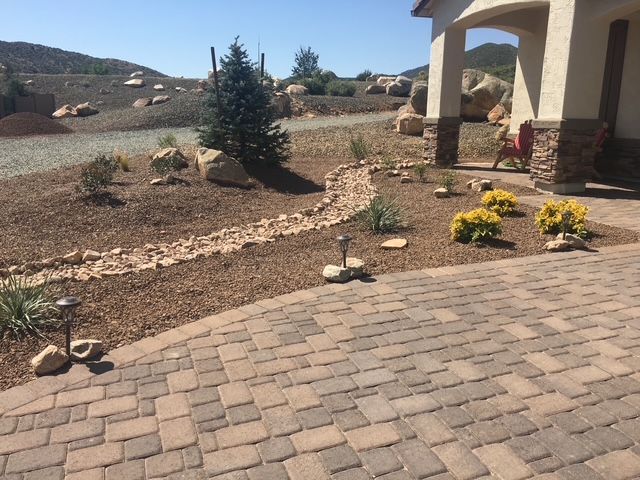
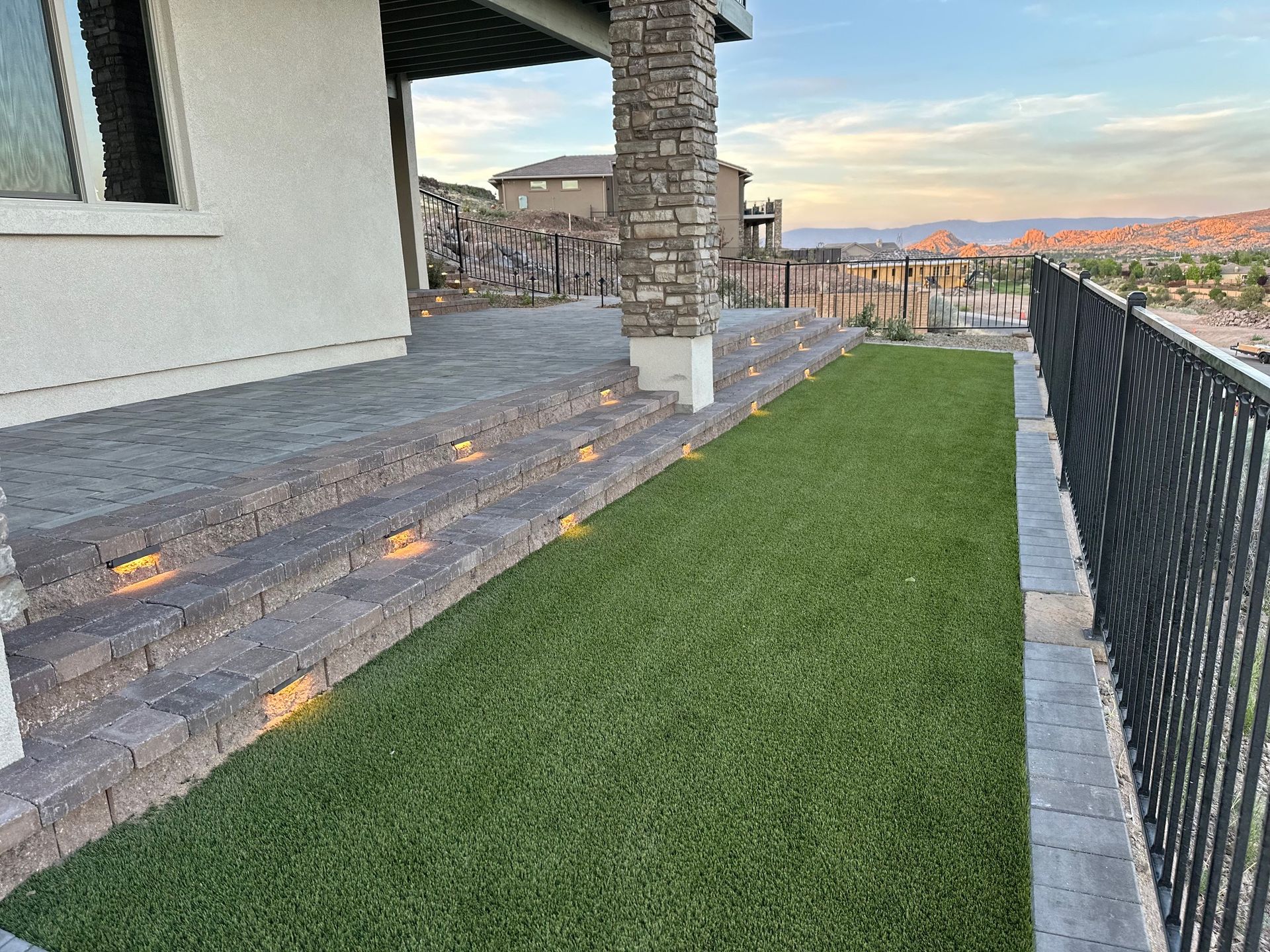
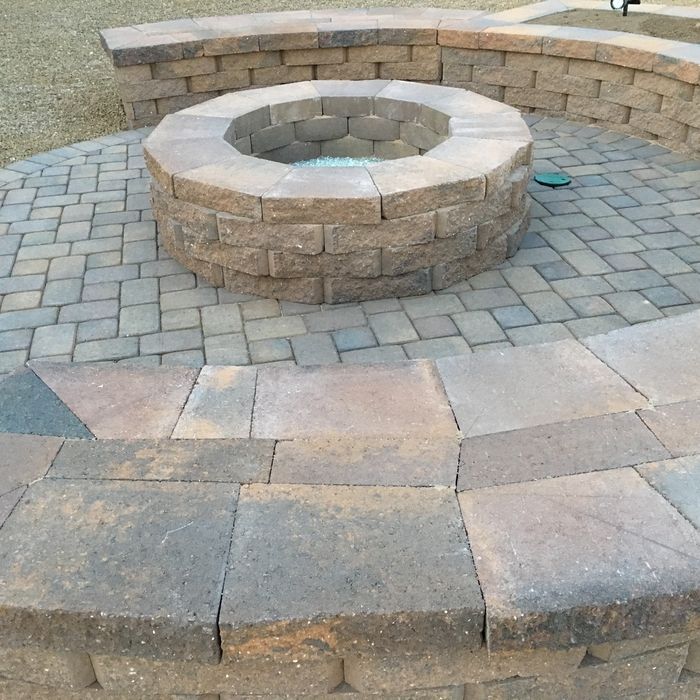
Gate approaches, barn entrances, trailer parking and the ground around water troughs take the most abuse. A compacted base topped with gravel, decomposed granite or pavers holds up far better than bare soil or grass. Putting geotextile fabric under the gravel keeps the base from mixing into the soil below, and sloping the surface slightly so water runs off keeps puddles from forming. Pavers and gravel are easy to repair, too, so a rough winter doesn't mean starting over.
Choose plants that are safe and tough
Stick with drought-tolerant plants suited to the Prescott area, and keep them out of reach of the animals. Our guide to the best plants for landscaping in Prescott is a good starting point.
Safety matters as much as toughness. Some common landscape plants are toxic to horses. Oleander is the best-known example in Arizona, and yew, red maple leaves and black walnut can also cause problems. Check anything unfamiliar before you plant it. The ASPCA toxic plant database is a useful reference, and the University of Arizona Cooperative Extension can answer regional questions.
Manage water and erosion
Monsoon storms can move a lot of water quickly, and decomposed granite soils erode easily once it starts to flow. A few simple habits help:
- Direct runoff away from barns, gates and high-traffic areas.
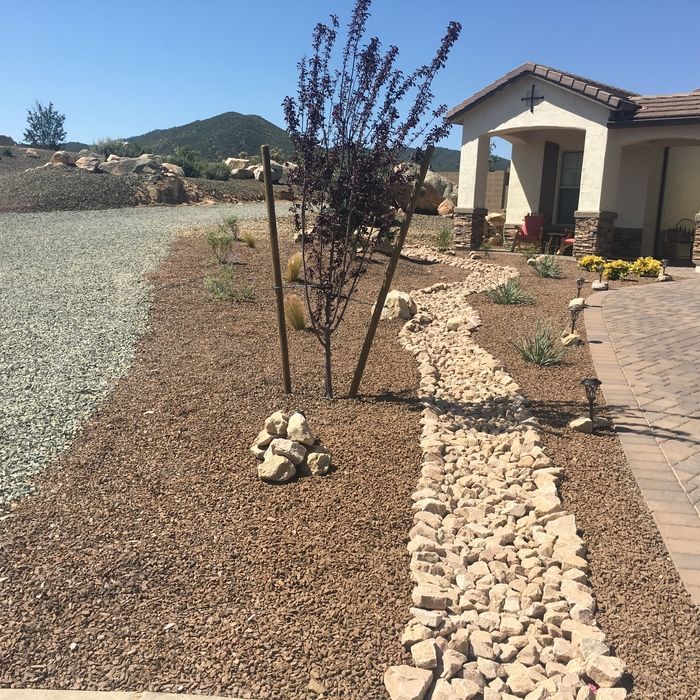
- Use rock or gravel to armor slopes and channels instead of leaving bare soil.
- Bury irrigation lines or keep them outside animal areas so they don't get chewed or tangled.
- Walk the property after the first big storm of the season and fix low spots early.
Use shade thoughtfully
Shade is valuable for animals in summer, but it works best when trees are planted with room to grow. Keep large trees back from structures and fence lines, where roots and falling limbs can cause damage, and prune regularly.
Keep it fire-wise
Much of the Prescott area sits in wildland-urban terrain, so defensible space matters. Thin dry grass and brush near the house and barn, keep stacked hay and dry debris away from buildings, and use gravel or hardscape as a break between wild vegetation and structures. The Arizona Department of Forestry and Fire Management has homeowner guidance on defensible space.
Keep maintenance realistic
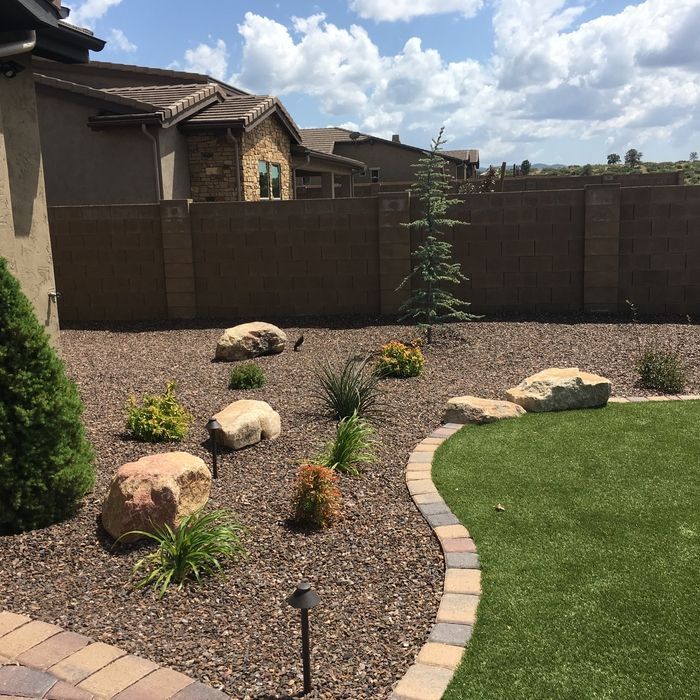
The properties that look best over time are usually the simplest: rock and decomposed granite for most of the ground, a handful of well-chosen plants, and irrigation on a few easy-to-manage zones. Landscaping and fencing also work best when they're planned together. Leave a clear strip along fence lines for inspection and repair, and if you're still planning or replacing fencing, this guide to choosing fencing for horses explains the options.
Angelsun Landscape Services provides landscaping, hardscaping and paver installation for properties in Prescott and the surrounding area. Contact us to talk through your property.